Pigeon Feather Pie Chart and Pigeon Clock Graph
A pair of illustrations exploring the observation and visualisation of pigeon populations in Leicester, created in response to a citizen science project by the Cornell Lab of Ornithology, which investigates why rock pigeons display such a diverse range of plumage colours, 2011- 2012.
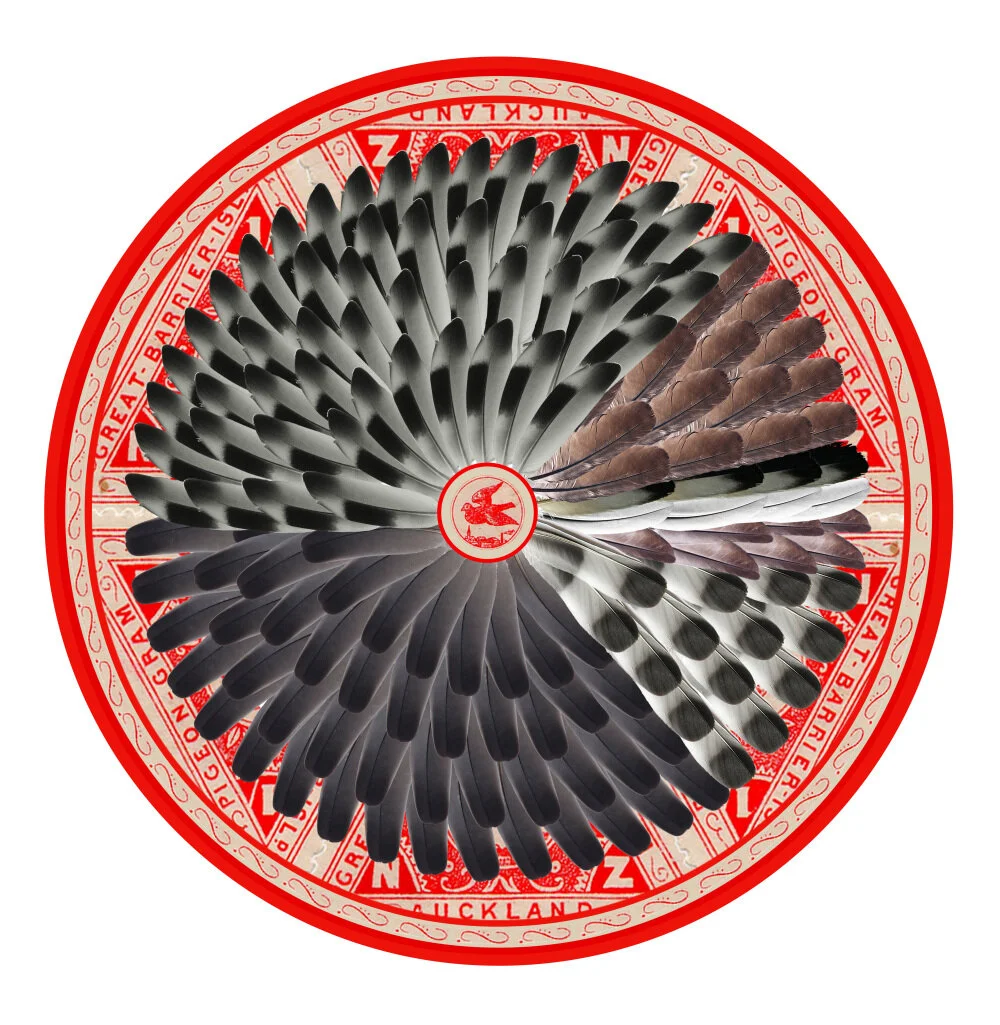

Pigeon Feather Pie Chart and Pigeon Clock Graph
Between 2010 and 2011, I observed local pigeon populations and collected data on their numbers and colour variations, translating these findings into two distinct visual interpretations of the data. Combining scientific enquiry with artistic experimentation, the works explore how everyday observations can be transformed into engaging visual narratives.
Pigeon Feather Pie Chart uses pigeon feathers to construct a pie chart representing the average colour distribution of the birds observed over the course of a year. The vivid red imagery draws inspiration from an early postage stamp created for the Pigeon-Gram service on Great Barrier Island, New Zealand. Established in 1897, the service used carrier pigeons to deliver messages between the island and Auckland, introducing a historical reference that connects the work to the longstanding relationship between pigeons and human communication.
Pigeon Clock Graph represents the average number of pigeons recorded throughout the year. The layered composition incorporates toulet-style clock faces from an automatic pigeon clock used in pigeon racing. Bird symbols and dots function as data markers, with each full bird representing ten pigeons and each dot representing an individual bird. This visual system transforms the collected observations into a graphic record of pigeon activity, combining the language of data with the imagery of timekeeping and pigeon racing.