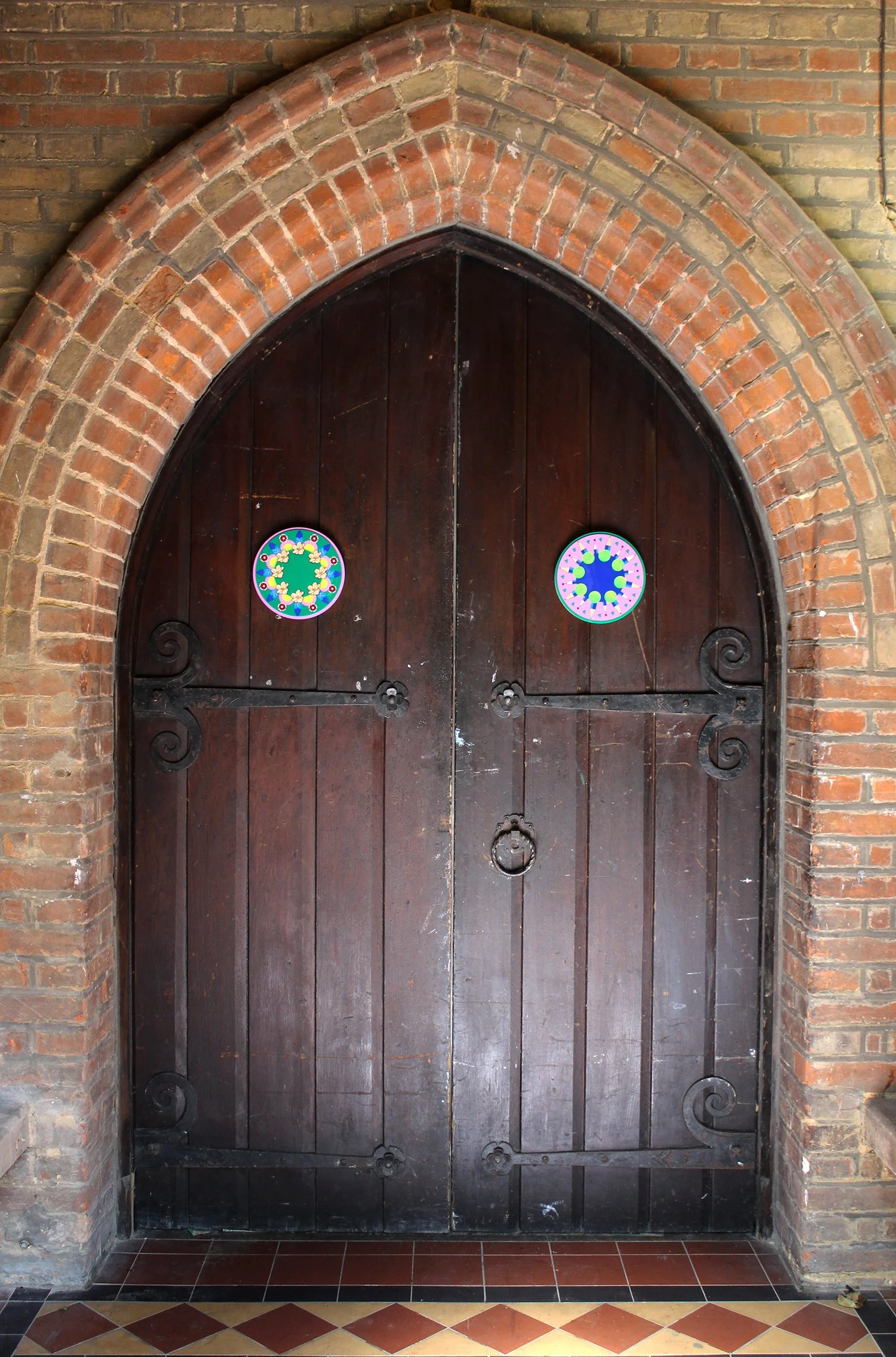
Sanctuary Doorway
This collection of four sculptures was created during an artist residency at St Saviour’s Church, a Grade I listed former Anglican church in Highbury, London, hosted by the Florence Trust in August 2023.
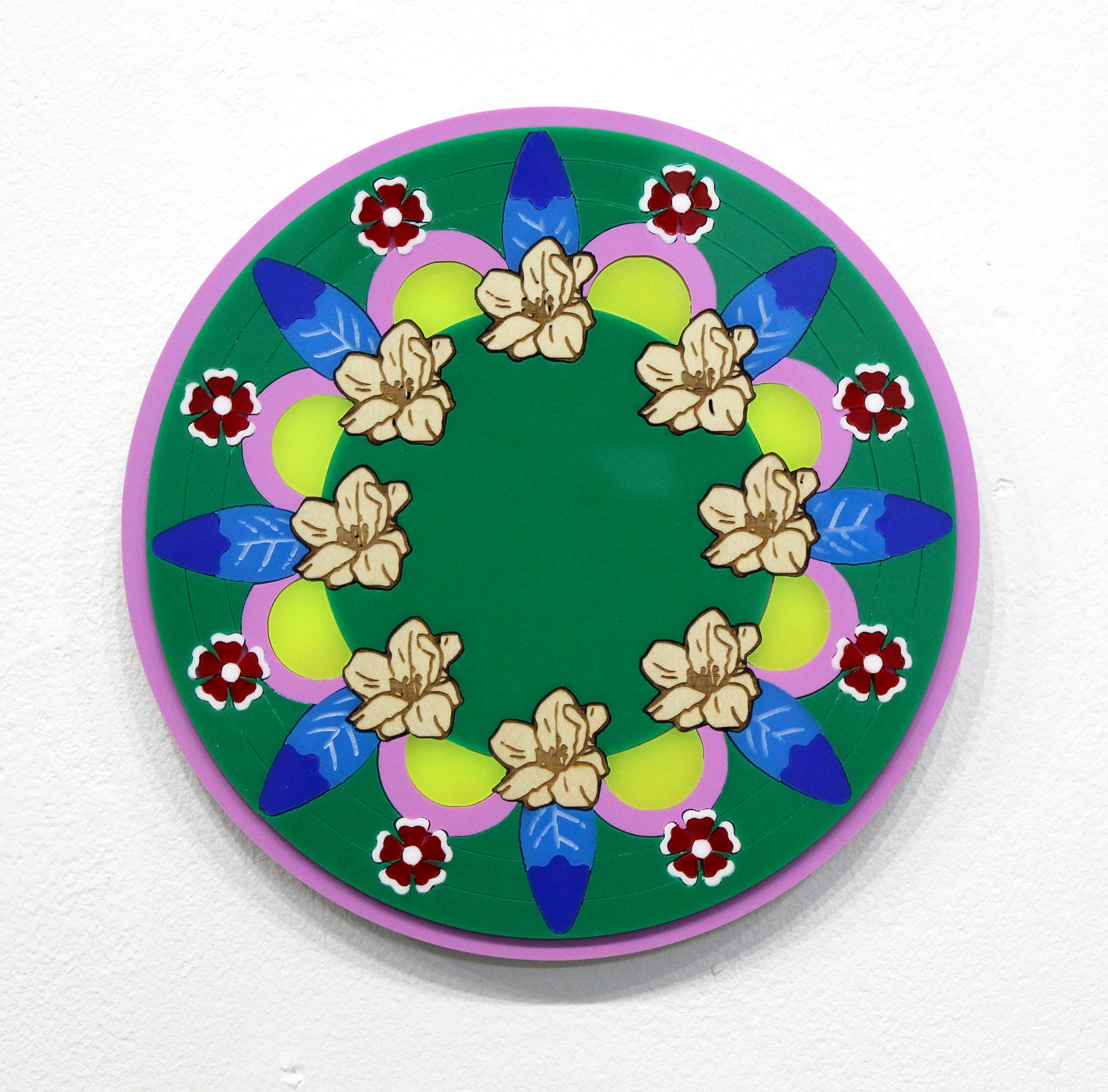
Wood Pigeon (Flower Buds and Feathers) - Sold

Fox (Tennis balls and Blue pens)
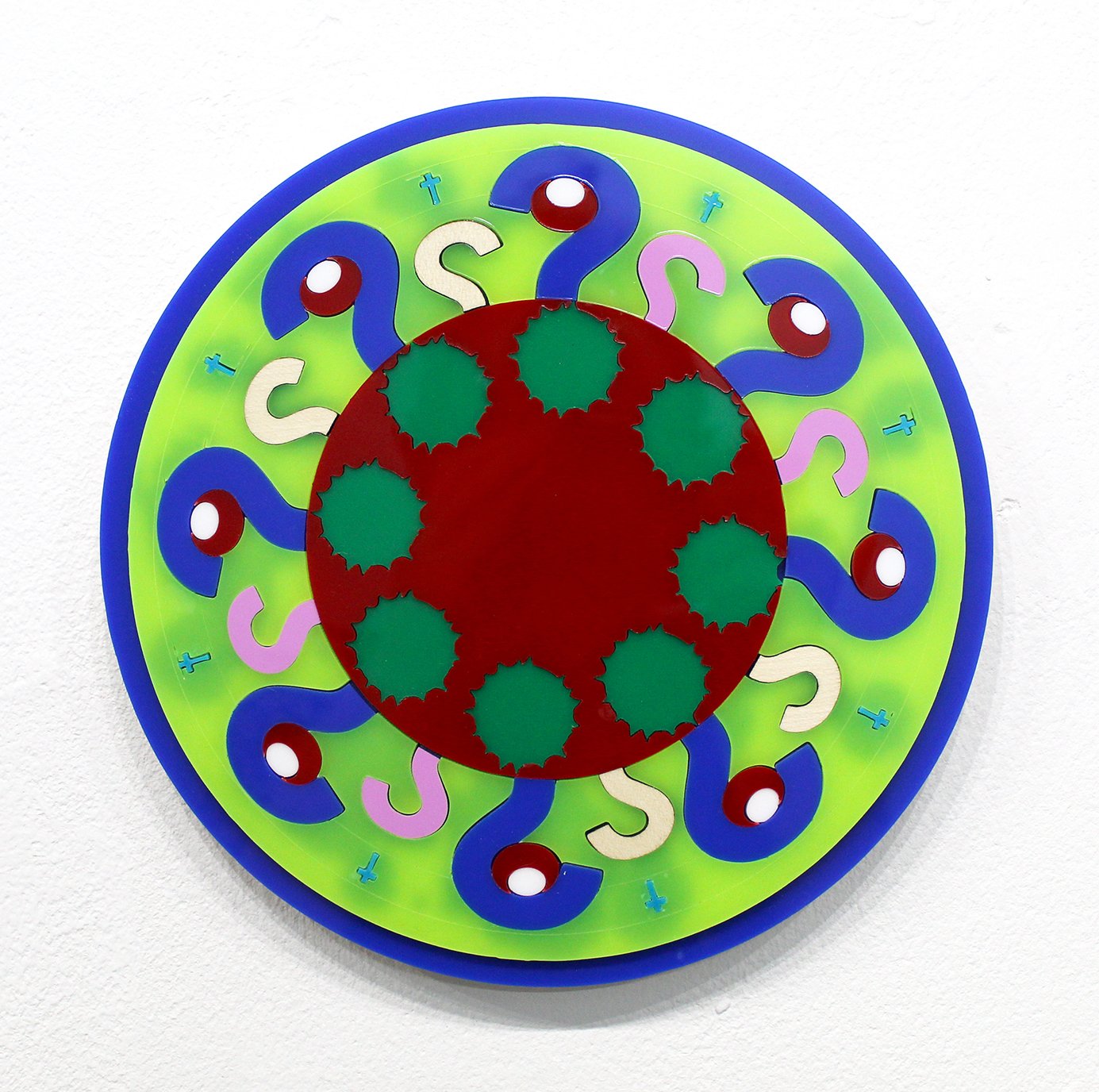
Squirrel (Conkers and Kinky Tails)
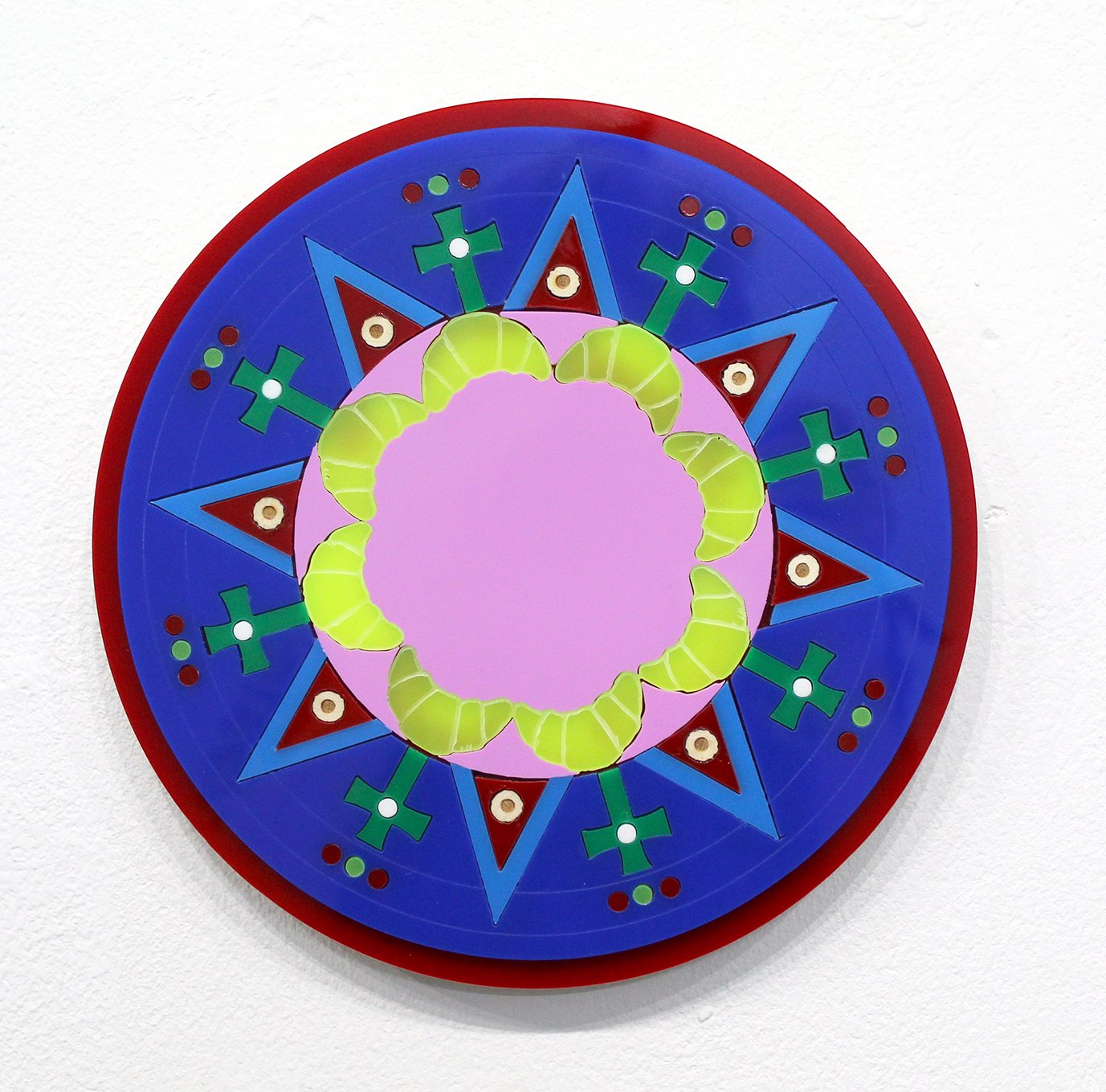
Magpie (Croissants and Chattering)


Over three days, Lucy Stevens observed and documented the building, its garden and the wildlife inhabiting the space. She was particularly drawn to the church’s decorative Arts and Crafts interior, with its painted details, and to the symbolic motifs adorning the exterior, including the clover, cross and circle. The circle, in particular, evokes themes of eternal love, everlasting life and commitment. These motifs are incorporated into the exterior of each sculpture, digitally designed and laser-cut from cherry wood and acrylic, with the materials and colours chosen to echo the luminous qualities of the church’s stained-glass windows.
Inside each sculpture is a personal interpretation of the wildlife Stevens encountered during her residency: the wood pigeon, magpie, squirrel and fox. Frequently seen and heard in the garden, these animals are often dismissed as pests, yet Stevens was drawn to their distinctive behaviours and overlooked characteristics. Each sculpture tells a story inspired by her observations: the wood pigeon’s appetite for flower buds; the magpie’s sharp, piercing call; the squirrel’s fondness for conkers and its zigzag movements to evade predators; and the fox’s curious habit of collecting tennis balls, pens and other objects to play with in the garden.
The collection’s title draws on the historical tradition of sanctuary door knockers, which symbolised the right to seek refuge in medieval England. This reference connects the sculptures to ideas of sanctuary, protection and belonging, while inviting reflection on the relationship between architecture, wildlife and the spaces we share.
In 2024, the sculptures were temporarily installed on the church’s main doors, bringing their intricate narratives into direct conversation with the building and its history.